FLAT ROOFING
Flat roofs that drain instead of pond
TPO, PVC and membrane roofs for low-slope homes and commercial buildings, installed by a GAF and Duro-Last certified crew.
Chapter 01
How flat roofs fail
A flat roof does not shed water the way a pitched one does, so every problem starts with water that stays. Heavy rain, clogged drains, ponding and UV exposure all work on the membrane, and so do the swings in temperature from a hot plateau summer to a freezing winter. Poor installation or no maintenance speeds all of it up.
The failures show up in the same places: seams that open, punctures from foot traffic and debris, and the edges around vents, curbs and drains. Frequent leaks, standing water, cracks, bubbling and repairs that keep coming back mean the system has weakened and is no longer protecting the building.
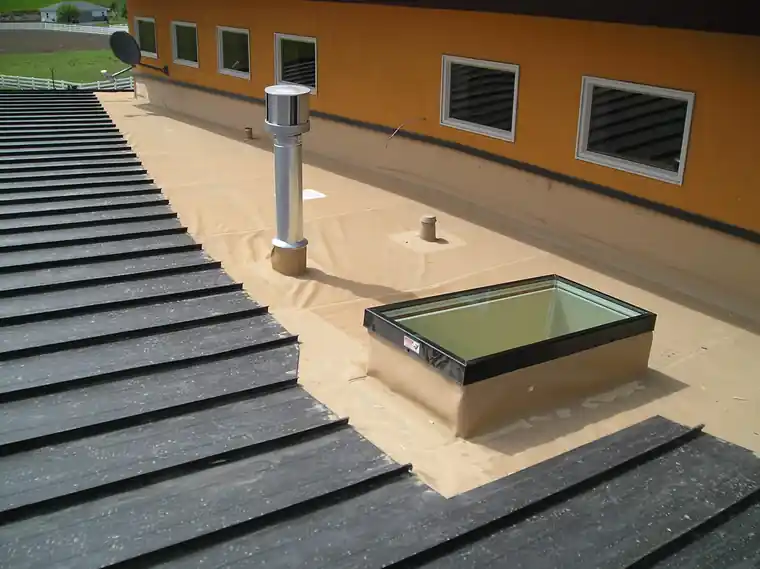
Skylight curb set into a commercial membrane roof
TPO, PVC and membrane systems, installed and repaired
We install and repair TPO, PVC and membrane roofs on commercial buildings and on homes with low-slope sections. The crew is certified by GAF and Duro-Last, and we use a self-propelled roofing trailer that keeps the mess off your lawn. Manufacturer warranties are available on commercial flat systems.
Repair or replace is a judgment call we make on the roof, with photos. A localized leak or a split seam can often be fixed. Widespread cracking, bubbling or standing water usually cannot, and we tell you so before you pay for a patch that will not last.
Late spring through summer is the best time to install, because dry, mild weather lets materials set properly and cuts weather delays.
Chapter 03
Maintenance and drainage on a flat roof
Plan on inspecting a flat roof at least twice a year, in spring and again in fall, with extra checks after heavy rain, storms or snow. Those visits catch leaks, drainage trouble and early damage while they are still cheap to fix.
Maintenance is mostly keeping water moving. Removing debris and cleaning the drains prevents leaks and ponding, and routine care extends the life of the roof and cuts down on repair bills. Winter adds its own job, so we also remove snow and ice dams from roofs and gutters.
“Hard rain in the fall revealed a little roof leak on our flat, foam roof! Not a normal thing to content with but Dan was up for the job and handled it quickly and effectively!” Debbie Champion, Google review.
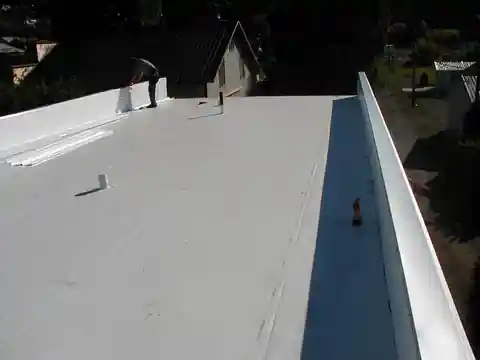
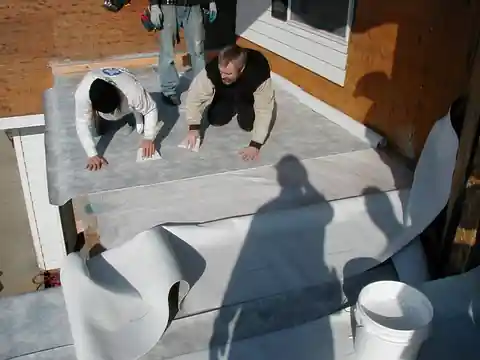
Membrane work from our files
 2004
2004Twice a year, spring and fall
A flat roof in Washington should be inspected at least twice a year, and again after heavy rain, storms or snow. Standing water is a warning sign, not a detail.